
Credit card issuers saw significant erosion of their card base during the July-September quarter as the Reserve Bank of India's (RBI) norms mandated deactivation of cards that have been inactive for a year. The second quarter of the current financial year saw outstanding cards-in-force decline by 2.55 million to 77.7 million. Prior to this, the industry, on an average, was witnessing a net addition of over 1.5 million credit cards a month as players became aggressive on the unsecured lending business after the pandemic.

'We have delivered a bitter medicine. It will take time to work.'

The Reserve Bank of India (RBI) has given its approval to two Russian banks for opening special vostro account for rupee trade. Sberbank, JSC VTB - the largest and second largest bank of Russia - are the first foreign lenders to receive this approval after the central bank announced the norms on INR trade in July. Both lenders have branch presence in India. Earlier this month, state-run UCO Bank received the RBI's approval to open a special Vostro account with Gazprombank of Russia. While the Kolkata-based lender is in the process of opening the account, the bank has received requests from various foreign lenders for opening such an account.
The outstanding credit card base dropped to 77.99 million in August from over 80 million in July, mainly on account of the new norms of the Reserve Bank of India (RBI) that warrant the deactivation of cards that are inactive for a year. While there was a 2.8 per cent decline in net card additions on a month-on-month (MoM) basis in August, a first in many months, credit card spends slipped 3 per cent on a high base. Still, spends topped the Rs 1-trillion mark for the sixth consecutive month.

Come October 1, merchants, payment aggregators and acquiring banks can no longer store the card details of customers.

Several Indian banks have alerted their customers not to download apps from any source other than official app stores. Banking customers are being targeted by a new type of mobile banking malware campaign using SOVA Android Trojan. This malware captures the credentials when users log onto their net-banking apps and access bank accounts. The new version of SOVA appears to be targeting more than 200 mobile applications, including banking apps and crypto wallets.
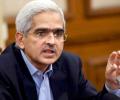
The increasing involvement of Big Tech in the financial system could give rise to concentration risk and there are potential spillovers, which call for closer attention, Reserve Bank of India (RBI) Governor Shaktikanta Das said on Tuesday. "...enormous amounts of consumer data is being generated and leveraged upon by a few entities (the so-called Big Tech) by virtue of their huge customer base. "Such developments raise concerns on concentration risk and potential spillovers as their level of engagement with the financial system strengthens in the years to come," Das said at the Global Fintech Fest 2022.

Russian traders have started asking for payments in ruble for their exports to India in a move that could derail trade between the two countries which gathered pace after the war in Europe. This is because Indian importers are unable to pay in ruble. The India-Russia trade gathered pace after Vladimir Putin invaded Ukraine in February this year. In the April-June quarter, India's imports from Russia were valued at $9.27 billion, up 369 per cent year on year.
With retail inflation surprising on the upside, the six-member monetary policy committee (MPC) of the Reserve Bank of India (RBI) is expected to increase the repo rate by 35-50 basis points (bps) in the review scheduled for September 28-30. According to economists, the central bank will continue to focus on bringing inflation down even though economic growth has remained sluggish. Data released by the government on Monday showed that the consumer price index (CPI)-based inflation increased by 7 per cent year-on-year (YoY) in August, thus, staying above the upper tolerance limit of the central bank for all the eight months of 2022.

To educate customers on the modus operandi of financial fraudsters and share inputs on safe banking habits, banks are now coming up with awareness campaigns aimed at preventing customers from falling into the trap of fraudsters.
Credit card spends touched an all-time high of Rs 1.16 trillion in July, registering a growth of 6.5 per cent on a month-on-month basis and 54 per cent year-on-year, latest data put out by the Reserve Bank of India revealed. Spends have topped the Rs 1 trillion level for five consecutive months now. Industry participants are expecting further tailwinds in credit card spends with the onset of the festive season, where spends typically remain at an elevated level.

Commemorating 75 years of India's independence, SBI has launched a 75-day Utsav Deposit Scheme, offering 6.10 per cent for fixed deposits. Senior citizens will get an additional 0.50 per cent and the offer is on until October 30, SBI said.

The Reserve Bank of India has on Wednesday lifted the ban on new customer acquisition by American Express which was imposed with effect from May 2021 due to non-compliance with local data storage norms. "In view of the satisfactory compliance demonstrated by American Express Banking Corp. with the Reserve Bank of India (RBI) circular dated April 6, 2018, on Storage of Payment System Data, the restrictions imposed, vide order dated April 23, 2021, on onboarding of new domestic customers have been lifted with immediate effect," RBI said. Similar bans were imposed on Diners Club International and Mastercard previously.

Outward remittances under the Reserve Bank of India's (RBI's) liberalised remittance scheme (LRS) made a strong comeback in the first quarter of FY23 as Indians increased spending on international travel, maintenance of close relatives, and gifts. The latest data for Q1FY23 released by the RBI shows that remittance by Indians under the scheme jumped 64.75 per cent to over $6.04 billion from $3.67 billion in Q1FY22. The amount remitted in Q1FY23 is even higher than that in Q4FY22, where outward remittance under LRS was to the tune of $5.8 billion. In April, about $2.02 billion was remitted, followed by $2.03 billion in May, and $1.98 billion in June, data released by RBI in the August bulletin shows.

A gradual approach to privatise public sector banks (PSBs) is more ideal than taking a big-bang approach, a study by Reserve Bank of India (RBI) staff has concluded. It has backed the government's idea to privatise two PSBs initially. Such a gradual approach would ensure that large-scale privatisation does not create a void in fulfilling important social objectives of financial inclusion and monetary transmission, the study has argued.

Kaizad Bharucha, executive director of HDFC Bank, emerged the highest earning banker for 2021-22 (FY22). This was revealed in a remuneration assessment of the country's top bankers, according to annual reports. Bharucha, who oversees wholesale banking at HDFC Bank, received Rs 10.64 crore remuneration in FY22, mainly due to Rs 4.46 crore as performance bonus. Although earned between 2017-18 and 2020-21 (FY21), the bonus payout was partly paid in FY22.
Credit card spends in June, although down marginally month-on-month (MoM), remained above the Rs 1-trillion mark for the fourth consecutive month. In June, credit card spends topped Rs 1.09 trillion, down 4.34 per cent MoM, revealed the data released by the Reserve Bank of India (RBI). However, on a year-on-year basis, spends were up 73 per cent. In May, credit card spends hit an all-time high, reaching Rs 1.14 trillion.

Unified Payments Interface (UPI) clocked over 6 billion transactions in July: the highest ever by India's flagship digital payments platform since its inception in 2016. UPI reported 6.28 billion transactions amounting to Rs 10.62 trillion, according to data released by the National Payments Corporation of India (NPCI), which operates the platform. Month-on-month, the volume of transactions was up 7.16 per cent and value increased 4.76 per cent.
The Reserve Bank of India (RBI) has relaxed card-on-file data storage norms pertaining to guest transactions checkout, whereby now, apart from the card issuer and the card network, the merchant or its payment aggregator involved in the settlement of the transactions can save the data for a maximum of T+4 days or till the settlement date, whichever is earlier. And, acquiring banks have been permitted to store the card-on-file data until January 2023 for handing other post-transactions activities. The industry reached out to the RBI on the issue and sought a solution.

HDFC Bank, the country's largest private-sector lender, lost to competition wholesale loans of around Rs 50,000 crore after it increased interest rates in May, said Chief Financial Officer Srinivasan Vaidyanathan in an analyst call. "There were some customers who were offered lower rates by other market participants. "But we decided not to cut back on our rates," he said while addressing analysts after the announcement of the bank's Q1 earnings.
 © 2026 Rediff.com - Investor Information - Advertise with us - Disclaimer - Privacy Policy - Sitemap - Feedback - About us - Terms of use - Grievances